HortGrow Blog
Choosing Your Coir Blend: Water Retention, Porosity & Crop Fit
HortGrow’s five coir blends combine coco pith, cut fiber and coco chips in different proportions. Choose a starting blend for your crop, then match it to your irrigation strategy, container size and crop cycle before placing a bulk or container order.
Understanding the fractions
Coco pith
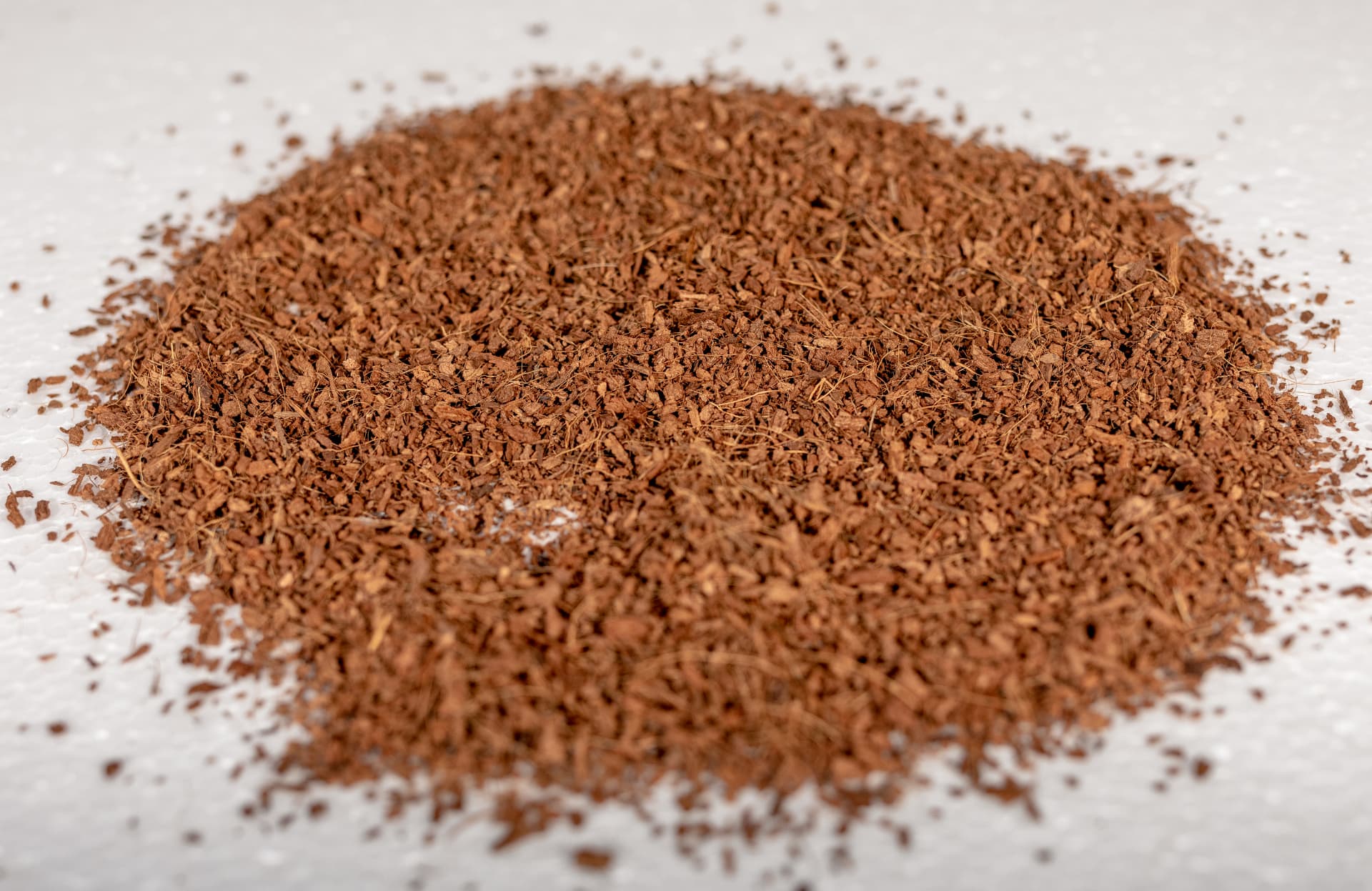
Pith is the fine fraction that provides moisture retention. GrowSure and GrowPlus use coco pith; GrowMax, GrowUltra and GrowExcel use high-porosity pith fractions.
Cut fiber
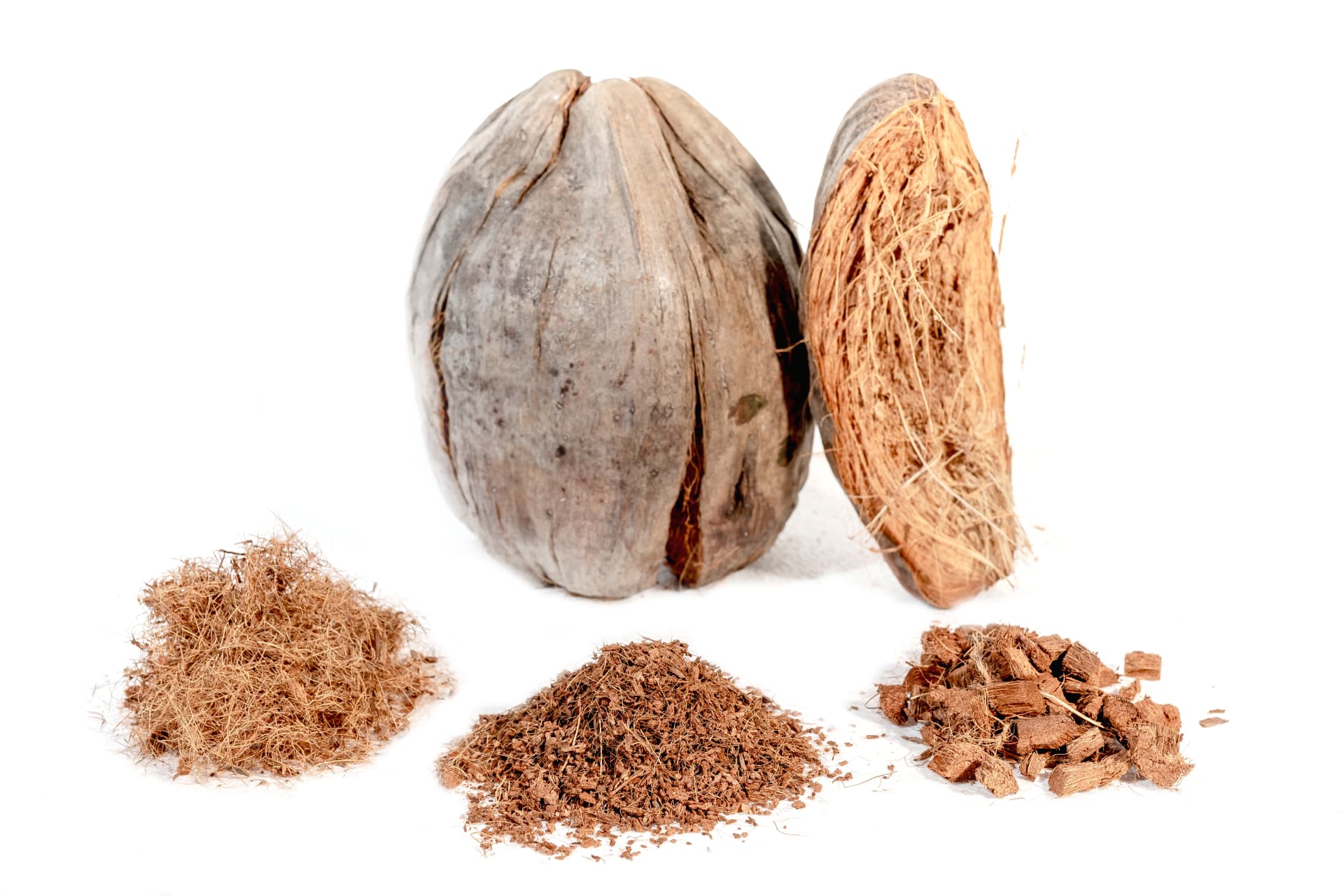
Cut fiber forms 10% of GrowPlus, GrowMax, GrowUltra and GrowExcel. The overview photo shows the fiber fraction on the left, pith in the center and chips on the right.
Coco chips
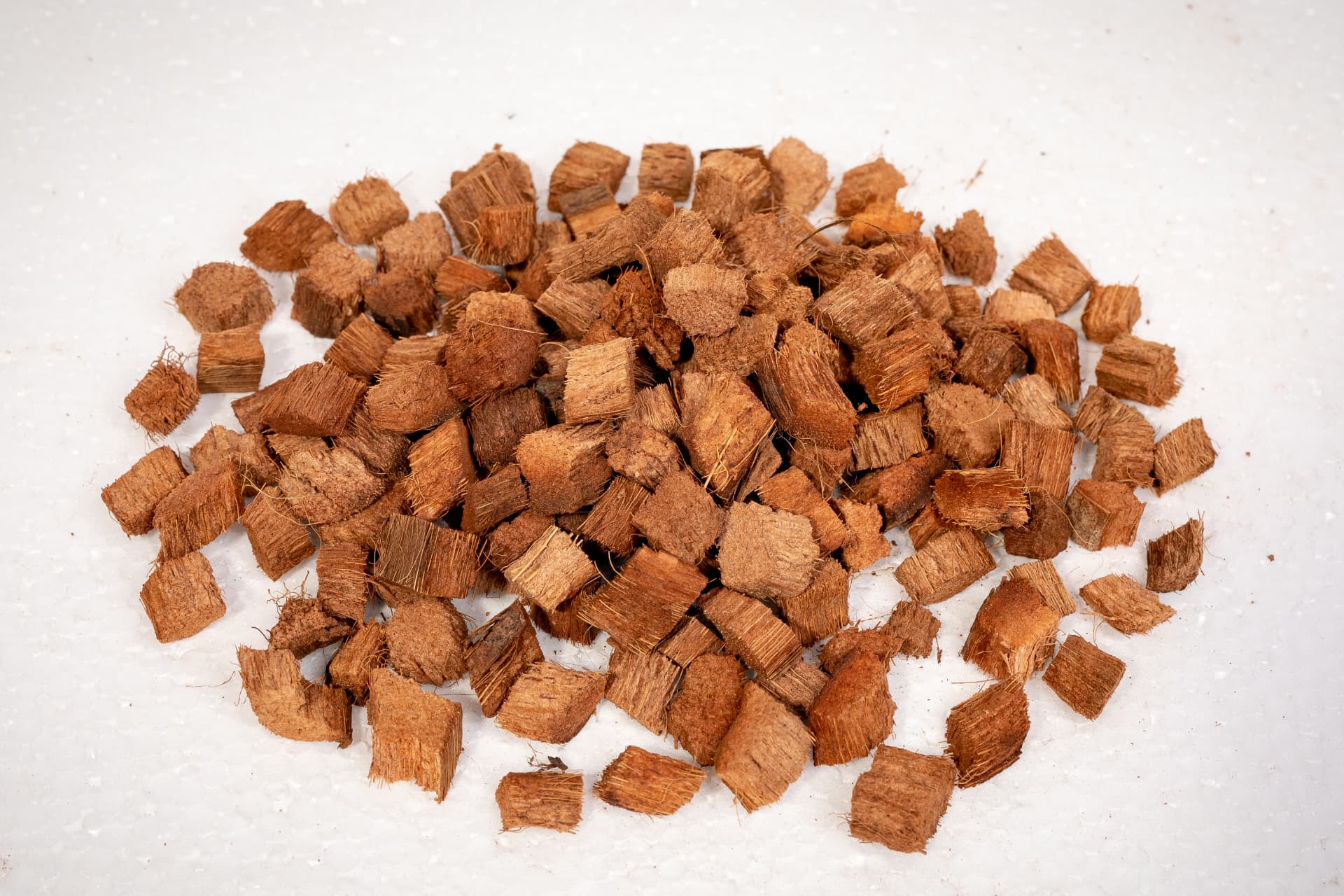
Chips are the coarse fraction. Their proportion increases from 10% in GrowMax to 30% in GrowUltra and 50% in GrowExcel, shifting the blend toward greater porosity and drainage.
The five-blend comparison
| Blend | Composition | Water holding capacity | Porosity / drainage | Crop applications |
|---|---|---|---|---|
| GrowSure | 100% Coco pith / 0% Cut fiber / 0% Coco chips | Maximum water holding capacity | Lowest porosity | Seed starts, propagation, and small container plants |
| GrowPlus | 90% Coco pith / 10% Cut fiber / 0% Coco chips | High water holding capacity | Low porosity; slightly more porous than GrowSure | General nursery plants |
| GrowMax | 80% High-porosity pith / 10% Cut fiber / 10% Coco chips | Balanced moisture retention | Balanced aeration | Cannabis, strawberries and similar crops |
| GrowUltra | 60% High-porosity pith / 10% Cut fiber / 30% Coco chips | Lower moisture retention | High porosity and drainage | Tomatoes, fruiting vegetables, raspberries and blackberries |
| GrowExcel | 40% High-porosity pith / 10% Cut fiber / 50% Coco chips | Lowest relative moisture retention | Highest relative porosity and drainage | Blueberries and long-cycle crops |
The composition percentages describe ingredient ratios, not measured water holding capacity (WHC) or air-filled porosity (AFP). Water retention and porosity descriptions are relative comparisons across these five blends, not laboratory specifications.
Planning a bulk or container order
Start with the crop application, then discuss irrigation frequency, container dimensions, climate and crop duration with HortGrow. More moisture-retentive blends and more open blends require different irrigation approaches; crop recommendations are a starting point, not a guarantee for every growing environment.
For domestic bulk and international container orders, include the blend name, product format, quantity, crop and delivery destination in your quote request. Request any custom composition or technical test data in your notes.